The situation
IFREQ started on a pitch. A group of people ran football tests on young players, scoring them on physical, technical, cognitive and mental ability, and they were good at it. What they did not have was a product. Results lived on paper and in spreadsheets. A player who tested well had nothing to show for it afterwards, and a club looking for exactly that player had no way to find them.
The testing was not the problem. Everything around it was: no way to register for a session, no way to hand a player a result they would actually share, and no way for a scout to compare two players on the same scale.
How we approached it
We learned the domain before we designed anything. Youth talent recruitment has its own economics and its own gatekeepers. Roughly 300 million people play the game and around 65,000 reach professional status, which tells you how much signal gets lost on the way up. We spent the time to understand how assessment staff work during a session, what a scout actually looks at, and why a good player two divisions down never gets seen.
Only then did we design the product. It had to serve two groups with almost opposite needs: the assessment team on the pitch, who wanted to run a session faster and more consistently, and the player, who wanted proof they could take to someone. The product is the bridge between them.
The design had a second constraint. Players range from six to eighteen years old, and it is their parents who register and pay. One interface had to work for a child and for an adult with a credit card, which is why it ended up minimalist, high contrast and built on a strict grid rather than styled like a kids’ app.
What we built
We were IFREQ’s first tech team, and the engagement covered the whole product rather than a slice of it. We built the brand and identity from scratch, then the UI and UX for the mobile app, the club-facing web app and the marketing site. The mobile app shipped on iOS and Android in Flutter. The web app and the site were React. We also built the backend, including the scoring algorithms that turn raw session data into a score you can compare across players, age categories and seasons.
That scoring is what the rest of the product rests on. A test result is only useful if it means the same thing for a fifteen-year-old in Brussels as for a seventeen-year-old somewhere else, which is a data modelling problem more than a football one.
Screen by screen
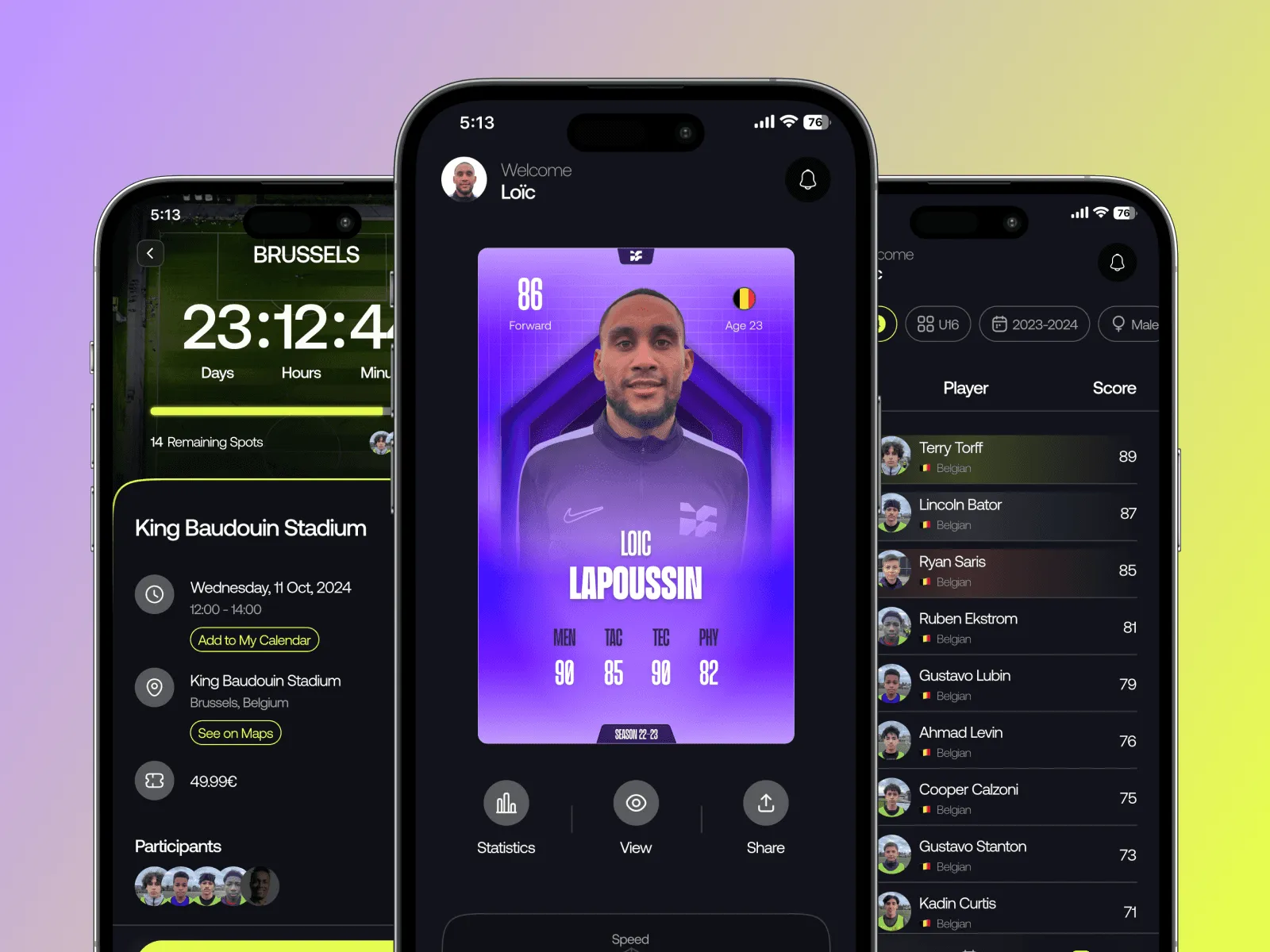
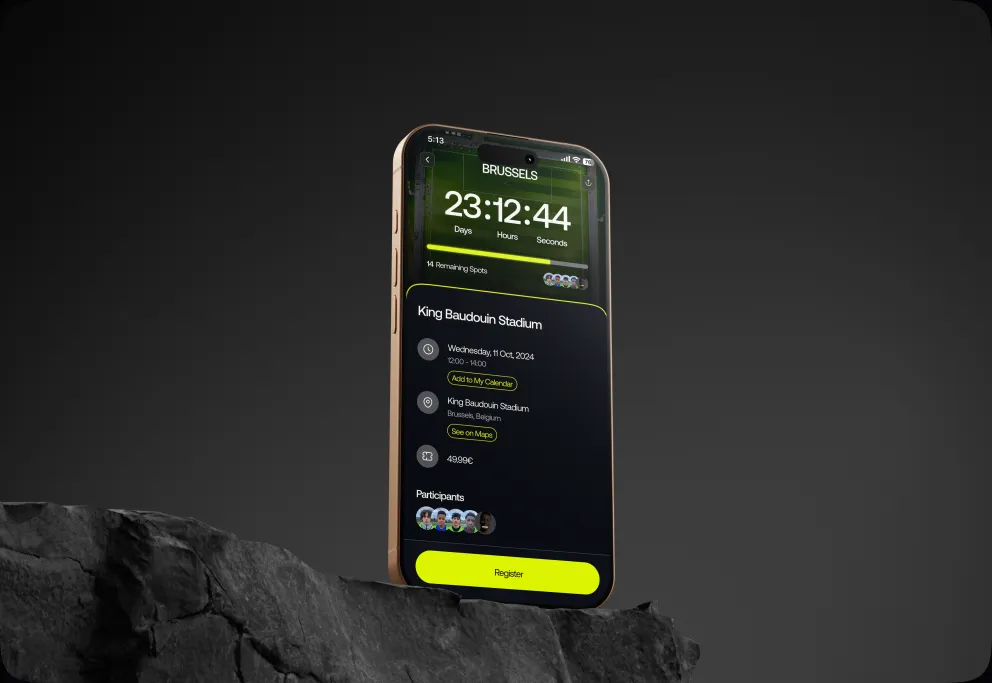
Test registration and ticketing came first. A player finds a session near them, sees what is left and books it. Sessions are real events at real venues with a fixed capacity, so the screen is built around scarcity: a countdown, the remaining spots, and who else is going.
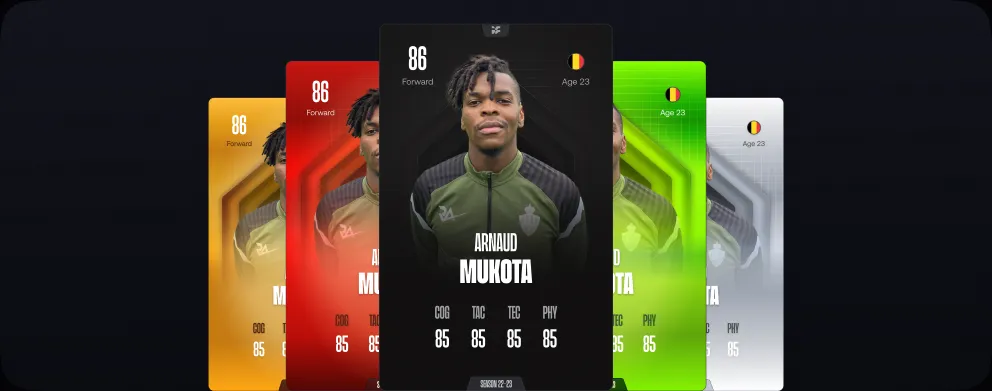
The player card is what the whole product exists to produce. Results come back as a card with a headline score and a breakdown across the four pillars (mental, tactical, technical, physical), designed to be screenshotted and posted rather than filed away.
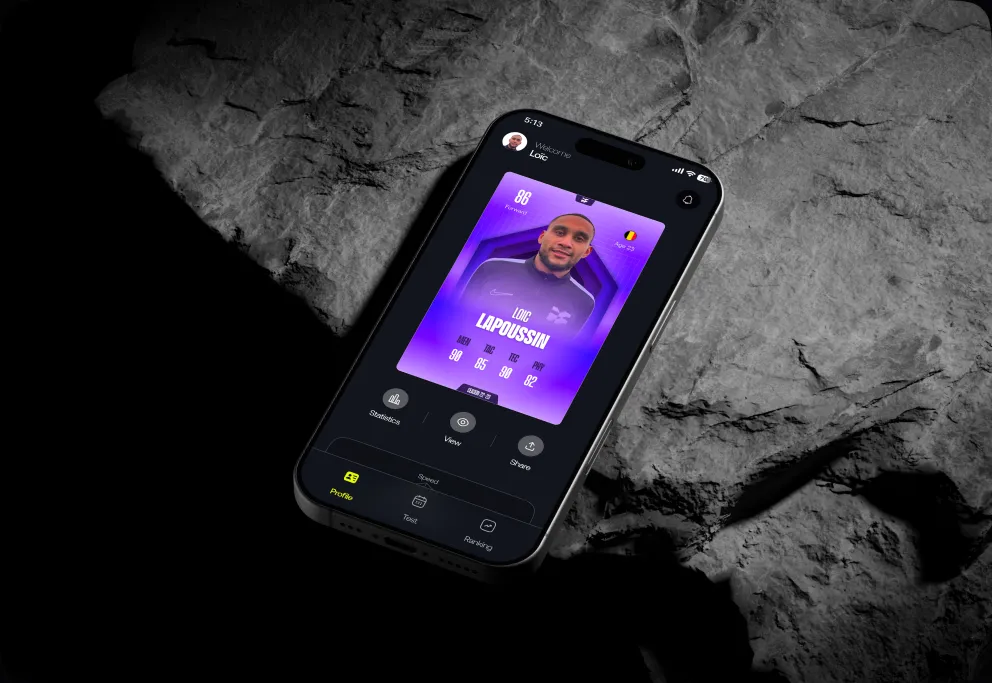
Card treatments change with the score, so a strong result looks like one. That part is borrowed from the football card games this audience already plays.
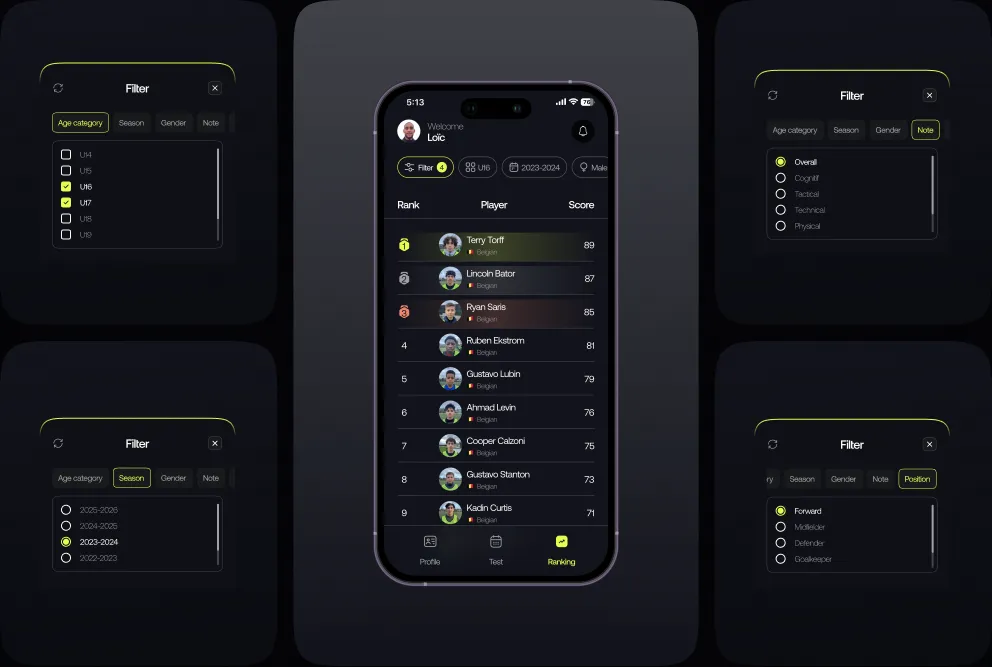
The leaderboard is what brings players back for a second test, and the filters are what keep it fair: age category, season, gender, position, and which pillar you are ranking on. A striker is not competing against a goalkeeper.
What changed
For the assessment team, a session now runs to a protocol and produces structured data at the end, instead of a clipboard to be typed up later. Players get something they can show. Clubs get a dashboard where a player outside the traditional circuit is findable.
On the back of that first release, IFREQ raised €1.5M, and the business has since reached €1M in annual recurring revenue.
We built the product and IFREQ built the business. The raise and the revenue are theirs. What we can say is that the platform those numbers depend on did not exist before this engagement.
Where it stands
IFREQ is live at ifreq.io and has grown past what we shipped. The evaluation model has been extended, the testing programme runs as recurring events and multi-day camps, and the club side lists partners including Bayern Munich, PSG and Benfica.